Pages

Wednesday, June 21, 2017

Developing Number Sense

In the past few years, I have incorporated dice, dominoes and ten-frames into my classroom math practise. I have to give credit to Sherry Parish' book Number Talks: Helping Children Build Mental Math and Computation Strategies. I know ten-frames are by no means a new idea, but I certainly had never used them with any regularity until last year.

I love magnets and I am always trying to find ways to use this magnetic white board for something new. This is a simple idea: a ten frame and round dollar store magnets.

Any Kindergarten teacher can guess the poem that goes along with this activity. Sometimes it's better to start with a Five-Frame at the beginning of the year. Although these are small quantities, it can take time for children to build true competency and understanding.


We play outdoors each morning for 30 minutes and strive to find ways to incorporate math into our outdoor centres. Here the students are helping to paint dice cards. They used fly swatters, rocks and bean bags to count the dots and demonstrate 1:1 correspondence. The eventual goal is an ability to subitize the dot card amounts on sight.
We have a light table in our room and I do find it hard to come up with new materials to place on it. I had dot transparencies, wooden numbers and beads on the light table for months and often observed children visiting and exploring. 

Sunday, June 11, 2017

Maker Space


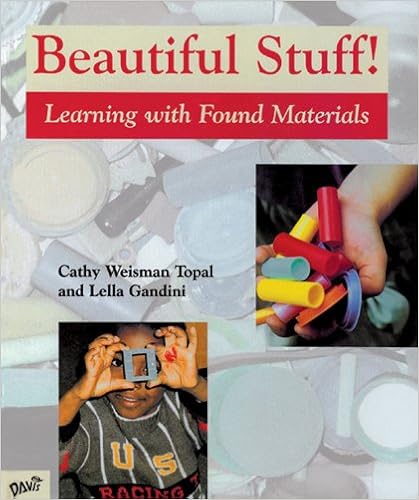
It seems that everybody in education is talking about Maker Spaces. In the world of Kindergarten the "maker" philosophy has always been woven into the program, especially in a play-based classroom. Whether you have an "art studio," a "make and take" centre or a "beautiful junk" table most of us who teach kindergarten have a space where we've collected items for students to use in their own creations. This year, I realized that my "beautiful things" shelf is a sort of Maker Space. I jokingly refer to them as my "hoarding jars." Joking aside, my art area was inspired by the book Beautiful Stuff!: Learning with Found Materials by Cathy Weisman Topal and Lella Gandini. The book is full of wonderful pictures that walks you through the whole process of eliciting donations from parents to sorting items to creating with loose parts. 
Here is what my art shelf looks like when it's tidy and organized. It doesn't stay this way for long!
 
I have collected empty coffee jars (my mother-in-law drinks A LOT of instant coffee) as well as purchased some jars from the dollar store. I fill the jars with items that would normally go in the garbage such as broken crayons, marker caps, water bottle lids and tissue paper scraps. I also use the jars to store arts and craft items that I've purchase. Whenever someone donates any interesting items or if I have scraps of craft supplies, it all gets put into a jar. When I've visited other classrooms, I've noticed that some teachers organize items by colour, but I find it more useful to organize them by type.


I do like to organize markers, crayons and coloured pencils by colour, It's aesthetically pleasing and helps the students to learn to sort by attribute. 

A common question I am asked is "do the children ask for help to get the jars down?" The students are encouraged to make a plan before I get a jar out and articulate their ideas. They are welcome to create with any of the items they see, however some items (like my grandma's button collection) can only be used for non-permanent creations. Many of the items are handy for setting up math activities. I use some of the items (rocks, broken plastic marble run tubes, beans, glass beads) for patterning, measuring and counting: 

Of course, many of the items can be used with playdough!

Here's a simple art idea that we came up with after someone gave me a bag of packing peanuts. The students spent days colouring them and creating sculptures out of them.

I find that organizing materials in an aesthetically pleasing way inspires both me and my students to be more creative. When my ECE and I are planning art, math or loose part explorations we often find ourselves staring at the jars and suddenly we get stuck with an idea.

Wednesday, February 8, 2017

Question of the Day


Question of the Day is a standard entry routine in my classroom. Each morning upon arrival, the students answer a question that a staff member has written. Whenver possible I try to incorporate pictures and drawings. Occasionally as the year progresses I may have children come up with a question. Inspiration for the questions can from a variety of sources: 
  • Likes and dislikes. Using the simple "Do you like" format can help children begin to recognize sight words. I also like to use "Which one do you like better" as  well
  •  Questions that have definite answers such as "Do you have a dog?" "Did you walk to school?" The children like questions that relate to their life and these questions can prompt discussions among the students as they enter the room. 
  • Questions inspired by stories that we have read. We will often photocopy pictures from books and ask questions about the characters or how the children might react to events in the book if they were real.

Survey Formats:
Checkmarks and X'
s: I really liked this format in my first few years of teaching kindergarten. I thought it was a nice and simple way that allowed all students to access the survey. You would be surprised how easily even a 3 year old can learn to draw a check mark or x. Cons: Although this method is fun for the students and helps develop some emergent fine motor skills, it's not a great way to teach data management concepts. Because the size of the checks and x's can vary, it's difficult for the children to get a sense of the concepts of "more" and "less." Also, I don't think the method transfers well to higher grade levels in which the children learn to do tally charts or other kinds of graphs. Having said all that, I do find that since I stopped using this kind of Morning Message, I see less children making their own survey's during playtime. I think this kind of survey is easy for a child to duplicate independently. See samples below.

Surveys that Use Names: A few of the Early Childhood Educators that I have worked with really insisted on surveys that incorporate children's names. Name recognition is in the Ontario Curriculum and so it is a skill that MUST acquire. However, for some reason I resisted this kind of survey. I really am not sure why. Maybe I thought it was too "old school" kindergarten. I really would advise any teacher doing this graph to use name cards on magnets like I have as opposed to having children write their names as I've seen done in some classrooms. You really want all children to be able to participate and not all children will be able to write their names with competence, especially at the beginning of the year.

Other fun ideas: I've seen lots of neat ideas to change up this morning routine. You can provide connecting cubes, plastic links, shower curtain rings, marbles. The children can take one item and place it in the clear container which corresponds with their answer. Using these concrete objects can provide opportunities to use rich math vocabulary each day. Use words such as: estimation, more, less, most, least, how many, how many more etc. Here are two simple ideas that allow children to explore data management in a hands-on way: 


As the year progresses, we often move from asking children simple questions about their preferences, likes and dislikes to encouraging students to make connections to literature: 


Here we asked the students to remember a read-aloud from a previous day. They had to remember which character was stronger: the troll or the 3rd Billy Goat Gruff. Changing the answer from a simple "yes" or "no" to a detail from a story encourages the children to think before answering. 

Estimating the results of the Question of the Day and then counting them can be worked into any circle time throughout the day or even revisited in a small group setting with students who need more explicit instruction. At beginning of the year, I do recommend doing this in the morning because little hands might find tampering with the concrete items too tempting to resist. You might go to revisit the survey later in the day, only to find that someone has dumped all the rings/links off and smudged the question. The joys and challenges of working with little ones! 


Still Life Painting

Some days we crack open our beautiful things jars and the children get creative with found objects. Process, not product. But other days, we set up beautiful and organized invitations to paint what they see. We choose materials with purpose and paint colours that capture (as best as we can) nature. Flowers, pussy willows, branches are all good subjects for still life art in Kindergarten.


Sometimes I put out popsicle or kebab sticks to help children to create lines for branches. It is also interesting to see how children use tools other than paintbrushes.