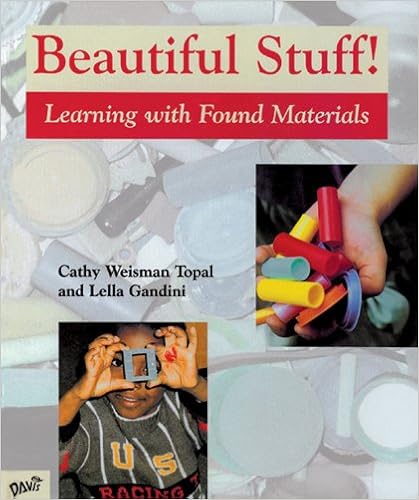
It seems that everybody in education is talking about Maker Spaces. In the world of Kindergarten the "maker" philosophy has always been woven into the program, especially in a play-based classroom. Whether you have an "art studio," a "make and take" centre or a "beautiful junk" table most of us who teach kindergarten have a space where we've collected items for students to use in their own creations. This year, I realized that my "beautiful things" shelf is a sort of Maker Space. I jokingly refer to them as my "hoarding jars." Joking aside, my art area was inspired by the book Beautiful Stuff!: Learning with Found Materials by Cathy Weisman Topal and Lella Gandini. The book is full of wonderful pictures that walks you through the whole process of eliciting donations from parents to sorting items to creating with loose parts.
Here is what my art shelf looks like when it's tidy and organized. It doesn't stay this way for long!


I do like to organize markers, crayons and coloured pencils by colour, It's aesthetically pleasing and helps the students to learn to sort by attribute.
A common question I am asked is "do the children ask for help to get the jars down?" The students are encouraged to make a plan before I get a jar out and articulate their ideas. They are welcome to create with any of the items they see, however some items (like my grandma's button collection) can only be used for non-permanent creations. Many of the items are handy for setting up math activities. I use some of the items (rocks, broken plastic marble run tubes, beans, glass beads) for patterning, measuring and counting:


I find that organizing materials in an aesthetically pleasing way inspires both me and my students to be more creative. When my ECE and I are planning art, math or loose part explorations we often find ourselves staring at the jars and suddenly we get stuck with an idea.


